
Likes
0
Want to Read Shelf
1
Read Shelf
0
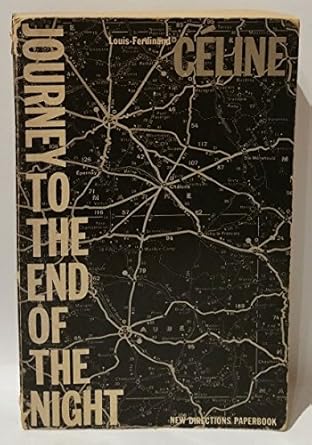
Journey to the End of the Night
Louis-Ferdinand Céline
"Journey to the End of the Night," written by Louis-Ferdinand Céline and first published in 1932, is a seminal work of 20th-century literature that vividly captures the existential despair and grotesque absurdities of modern life through its unconventional narrative style and rich, layered semantics. The novel follows the life of Ferdinand Bardamu, a semi-autobiographical character who embarks on a profound journey that oscillates between the minds and horrors of World War I, the dehumanizing experiences of colonial Africa, and the bleakness of urban life in Paris and America. Céline employs a stream-of-consciousness technique that mirrors the chaotic thoughts and fragmented perceptions of his protagonist, resulting in a disjointed, frenetic narrative that resonates with feelings of disillusionment and nihilism. Throughout the novel, the semantic layering is crucial as it intertwines Bardamu’s personal observations with broader social critiques, revealing a catastrophic landscape characterized by war's brutalities, capitalism's greed, and the profound sense of alienation inhabiting the human experience. The repetitive and often crude language, punctuated by a series of jarring images and striking colloquialisms, serves to heighten the raw emotions that pervade the text, making the reader acutely aware of the absurdity and irrationality of existence. This deliberate stylistic choice also acts as a form of rebellion against traditional narrative forms, inviting readers to engage deeply with the existential themes while wrestling with the modernity of language itself. The novel revolves around central themes of suffering and the futility of life, exploring how individuals are often at the mercy of larger socio-political forces beyond their control. Bardamu's encounters with various characters—including fellow soldiers, colonial subjects, and urban denizens—paint a vivid tapestry of human depravity and resilience, suggesting that existence is riddled with contradictions and paradoxes. The grotesque, often darkly humorous portrayal of reality challenges the reader to confront uncomfortable truths about humanity's propensity for self-destruction. Additionally, the interplay between fate and free will is prominent, as Bardamu often finds himself oscillating between passive acceptance and desperate rebellion against the circumstances that ensnare him, underscoring an overarching sense of existential crisis. Moreover, the novel critiques the modern world’s mechanization, reflecting on how technological advances and industrialization have dehumanized individuals, reducing them to mere cogs in a vast, indifferent machine. This scathing critique extends to medical practice, as Bardamu's experiences as a doctor reveal the ways in which the healthcare system can also perpetuate suffering rather than alleviate it. Céline's insistence on the grotesque and the vulgar acts as a profound commentary on the human condition, suggesting that beauty and horror coexist in a complex relationship, challenging the notion of aestheticism within literature itself. The stark, often brutal explorations of mortality and suffering express a deep empathy for the human plight, as every character Bardamu encounters embodies different facets of despair, hope, and the relentless quest for meaning. Ultimately, "Journey to the End of the Night" is a bold, provocative examination of the 20th-century experience, encapsulating the turmoil of an era marked by war, existential dread, and a profound search for identity within a landscape of chaos. Céline’s intricate use of language, rife with rhythm and a kind of musicality that mirrors the pulse of life itself, invites readers to navigate the shadows of the human psyche, engaging with the visceral realities that define our existence. This narrative not only serves as a critique of societal norms but also acts as a mirror reflecting our innermost fears and aspirations, urging us to confront the uncomfortable truths lurking beneath the surface of our everyday lives. The novel's ending, fraught with ambiguity, leaves the reader contemplating the cyclical nature of suffering, forever chasing an elusive notion of hope while remaining acutely aware of life’s inherent absurdity. Thus, Céline’s masterpiece remains a powerful testament to the complexity of human existence, capturing the essence of struggle, the quest for meaning, and the relentless journey toward the elusive end that we all must eventually face, making it an enduring work that resonates through the ages.